

Venezuela Post-Maduro: Trump's Oil Bonanza Dream Meets Political Reality
Nearly two weeks after the U.S. military operation that removed Nicolás Maduro from power, Venezuela faces a chaotic transition as Trump's oil bonanza expectations meet the country's devastated infrastructure.
Key Takeaways
- Nearly two weeks after the U.S. military operation that removed Nicolás Maduro from power, Venezuela faces a chaotic transition as Trump's oil bonanza expectations meet the country's devastated infrastructure.
- Trump's Venezuelan Gamble: Maduro Gone, Oil Dreams and Political Chaos Arrive TogetherNearly two weeks after the U.S. military operation that removed Venezuelan President Nicolá...
- Published: Mar 04, 2026 — World News

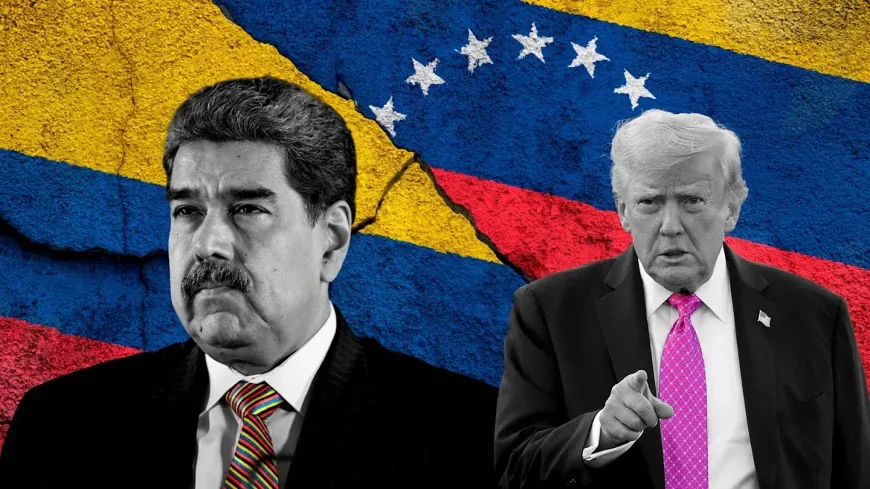
Trump's Venezuelan Gamble: Maduro Gone, Oil Dreams and Political Chaos Arrive Together
Nearly two weeks after the U.S. military operation that removed Venezuelan President Nicolás Maduro from power in a raid on Caracas, Venezuela is in the early stages of a political transition whose shape remains deeply uncertain, whose timeline has not been articulated, and whose economic promises are running into the hard realities of a country whose oil infrastructure has been devastated by a decade of mismanagement, sanctions, and deliberate asset stripping. Secretary of State Marco Rubio told reporters that democratic transition would "take time" — a formulation that satisfied no one in Caracas, Washington, or Latin American capitals watching the situation with a mixture of hope and alarm.
Trump's stated expectation — articulated before and after the operation — was that removing Maduro would unlock a rapid resurgence of Venezuelan oil production that would benefit both U.S. energy companies and global supply. Analysts and oil industry executives have poured cold water on that timeline. Venezuela's state oil company PDVSA has been hollowed out over a decade: its technical workforce has largely emigrated, its infrastructure is in disrepair, its contracts with foreign operators are legally contested, and the sanctions regime that applied to Venezuelan oil exports — and which the Trump administration is now nominally relaxing — has created a web of secondary market relationships that cannot be unwound quickly.
The democratically elected President Edmundo González — who won the July 2024 presidential election that Maduro fraudulently claimed — is the internationally recognised alternative. But González spent 2025 in exile, and his return to Venezuela to assert authority over a country whose institutions have been systematically captured by Chavismo over 25 years represents a political and administrative challenge that no transition team has yet fully mapped. The nine-member transitional presidential council that briefly attempted to fill the institutional vacuum was itself riven by internal disputes before the Maduro removal.
Latin American Governments React With Caution and Concern
The regional reaction to the U.S. military operation against Maduro has been significantly more ambivalent than Washington anticipated. Brazil's President Luiz Inácio Lula da Silva faces a diplomatic dilemma: his government had maintained formal relations with Caracas and hosted Venezuelan diplomatic missions even as Maduro's repression intensified. Expressing open support for the U.S. operation would alienate Lula's political base and Brazil's traditional non-intervention foreign policy constituency. Expressing opposition would align him with a collapsing authoritarian government and antagonise the Trump White House at a moment when Brazil needs U.S. cooperation on trade. Lula's response has been studied silence punctuated by calls for a "legal and orderly" transition — language that satisfies neither camp.
Mexico's President Claudia Sheinbaum has walked a similar tightrope. Mexico's MORENA government has deep ideological solidarity with the Venezuelan left, but Sheinbaum is simultaneously managing a fragile relationship with Trump over trade and immigration. The football massacre in Guanajuato in February — attributed to cartel violence — gave Trump additional leverage to demand security cooperation that constrains Sheinbaum's room for diplomatic manoeuvre.
Colombia's Petro, whose country shares the longest border with Venezuela and whose peace process with Venezuelan-sheltered ELN guerrillas was the cornerstone of his foreign policy, has the most direct stake in what emerges from the Venezuelan transition. A chaotic Venezuela produces refugees, weapons, and criminal organisations that cross into Colombian territory — a problem Petro's "total peace" programme was already struggling to manage before the Maduro removal added an entirely new dimension.
The Eight Million Venezuelans in Exile
Eight million Venezuelans — the largest displacement crisis in the Western Hemisphere's history — fled their country during Maduro's rule. Their return, reintegration, and political participation in any new Venezuelan polity represents a challenge of extraordinary scale. U.S. immigration policy under Trump, which prioritised deportation of Venezuelan nationals who entered the United States without authorisation, created an immediate tension: the same administration that removed Maduro was simultaneously deporting Venezuelans who fled his government.
Regional economies — Colombia, Peru, Ecuador, Chile, Brazil — have absorbed millions of Venezuelan migrants over the past decade, generating domestic political pressures that contributed to the rightward turn in Latin American electoral politics. Whether those migrants return to Venezuela, remain in their current countries, or continue moving creates complex planning challenges for governments across the region.
According to Michael Shifter, former President of the Inter-American Dialogue, "Removing Maduro was the easy part. The hard part is everything that comes after — and right now, Washington doesn't have a clear answer for what that looks like, and neither does anyone else."
Whether Venezuela's transition produces a functional democratic government within months, or whether it descends into a prolonged contest among competing power centres — military factions, Chavista holdouts, criminal networks, and exile political organisations — will determine whether Trump's Venezuelan operation is remembered as a strategic success or the opening chapter of a protracted regional crisis.
What's Your Reaction?
 Like
0
Like
0
 Dislike
0
Dislike
0
 Love
0
Love
0
 Funny
0
Funny
0
 Wow
0
Wow
0
 Sad
0
Sad
0
 Angry
0
Angry
0


Comments (0)