






























African Nations Renew Push for Permanent UN Security Council Seats
African diplomats pushed for continental permanent UN Security Council seats, citing the body's documented failures on Sudan, DRC, and Sahel crises.
Africa Confronts the UN's Democratic Deficit With Fresh Demands for Permanent Council Seats
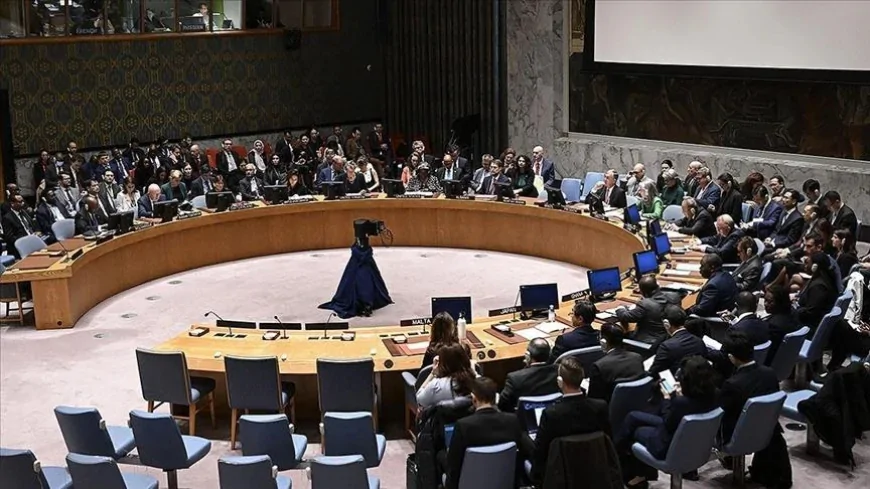
African think tanks, diplomats, and continental institutions have renewed their demand for at least two permanent seats on the United Nations Security Council, intensifying a push for institutional reform that has gained new urgency against the backdrop of the US-Iran war, Russia's invasion of Ukraine, and a series of African security crises — Sudan, South Sudan, the Sahel, eastern DRC — in which the UNSC has been either paralysed by great power vetoes or demonstrably ineffective in protecting civilian populations.
The campaign, coordinated through the African Union and supported by a consortium of African diplomatic think tanks, argues that the current UNSC architecture — in which the African continent of 54 nations holds no permanent representation — is a structural anachronism that both reflects and perpetuates the global power inequalities that undermine legitimate multilateral governance. Africa currently holds three rotating, non-permanent seats. None of those seats carries veto power; none carries permanent membership; and none provides the institutional continuity needed to address the continent's protracted security crises.
The renewed push comes as the United States, deeply absorbed by its Iran war, has declined to attend or host G20 forums in South Africa, the current G20 president, and has signalled diminishing interest in multilateral reform agendas. That American disengagement is itself an argument for African agency at the UN — a body that, unlike the G20, operates through rules that make absence more costly.
The Ezulwini Consensus: Africa's Long-Standing Position
The African Union's official position on UNSC reform has been codified since 2005 in what is known as the Ezulwini Consensus, which calls for Africa to receive at minimum two permanent seats with full veto rights — a condition that has made African UNSC reform demands structurally incompatible with the partial reform proposals favoured by potential new permanent members in Asia, Latin America, and Europe who are prepared to accept permanent seats without veto power.
The disagreement over veto rights is the central sticking point. Germany, Japan, India, and Brazil — the so-called G4 — have all pursued permanent UNSC membership in recent years, with varying degrees of diplomatic support from existing permanent members. None has demanded veto rights as a condition. Africa has. That insistence reflects a deliberate political calculation: without the veto, permanent African representation would be qualitatively inferior to that of the current P5 and would entrench rather than resolve the power asymmetry that motivates the reform demand in the first place.
According to Dr. Monde Muyangwa, Director of the Africa Programme at the Wilson Center in Washington DC, "The African argument is structurally coherent: if you join a club where some members have a right others don't, you have created a two-tier permanent membership that is arguably worse than the current two-tier system of permanent and non-permanent. The veto demand is not maximalism — it is consistency."
The Sudan and Sahel Context: Why Reform Urgency Has Increased
The political case for African UNSC reform is being made in real time by the failures of the current system to address African crises. In Sudan, two years of devastating civil war between the Sudanese Armed Forces and the Rapid Support Forces have killed tens of thousands, displaced millions, and created a humanitarian catastrophe that the UNSC has been unable to address due to competing great power interests in backing different factions. In the Sahel, the withdrawal of French and UN peacekeeping forces has left populations in Burkina Faso, Mali, and Niger exposed to jihadist violence that worsens with each passing month.
The first UN World Food Programme supply flight in three years landed in Khartoum Thursday — a milestone that underscores, through its singularity, how completely normal humanitarian access to Sudan's capital has collapsed. That a single supply flight constitutes a newsworthy event speaks to the depth of the governance failure that UNSC paralysis has helped enable.
The African push for permanent UNSC representation will not be resolved in any single diplomatic campaign. The procedural pathway to reform — requiring amendment of the UN Charter, ratification by two-thirds of member states, and approval by all five current permanent members — means the structural veto on change is held by precisely those states with the most to lose from genuine power redistribution. But the political momentum building around the demand is real, and the arguments available to African diplomats have never been more empirically grounded.
The A3 Plus Mechanism and the Battle Inside the UN System
African states on the UN Security Council — elected members sometimes referred to collectively as the A3 — have historically struggled to present unified positions because of different bilateral relationships with China, Russia, the United States, and France among their rotating member states. The current A3 configuration, which includes Sierra Leone, Algeria, and Guyana (a Caribbean state with strong African diaspora connections), has been more coordinated than some previous incarnations, but the structural constraints of rotating, non-permanent membership without veto power limit the group's ability to shape UNSC outcomes on African crises.
The call for permanent African representation is therefore not simply about status; it is about the operational difference that permanent membership with veto rights would make in concrete decisions about peace operations, sanctions, humanitarian access authorisations, and atrocity prevention in African contexts. Under the current architecture, African crises are adjudicated by a body on which Africa has no permanent voice — meaning that Russian or Chinese vetoes can block accountability for atrocities in Sudan, or that Western political calculations can shape peace operation mandates without African governments being able to insist on different terms.
The AU summit scheduled for later this year is expected to adopt a formal institutional position reaffirming the Ezulwini Consensus and calling on the UN General Assembly to convene a formal reform negotiation. Whether that call generates different results from previous iterations depends on whether the US, UK, France, Russia, and China — the five permanent members who would need to accept the dilution of their own exclusive status — are prepared to engage seriously with a reform demand that is both politically legitimate and institutionally threatening to the existing power distribution.