






























Nepal Votes After Gen Z Revolt Toppled Government Six Months Ago
Nepal held its first general election since a Gen Z-led uprising dissolved parliament in September 2025, with 18.9 million voters choosing between old parties and new reform candidates.

Nepal Goes to the Polls in Its Most Consequential Election in a Generation
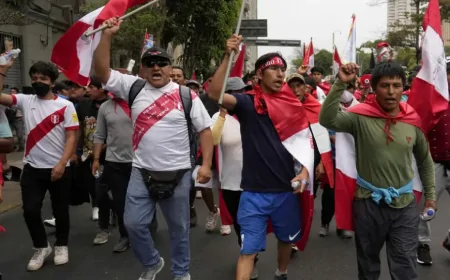
Nepal opened its polling stations at 7:00 a.m. local time on Thursday, March 5, 2026, dispatching nearly 18.9 million eligible voters to more than 23,000 polling centers across a country that, six months ago, was on fire. The election to choose 275 members of the House of Representatives is the direct product of a political earthquake: the Gen Z-led uprising of September 8, 2025, in which at least 77 people died, government buildings burned across Kathmandu, and Prime Minister Khadga Prasad Sharma Oli's administration collapsed within 48 hours under the weight of street pressure it could not contain.
The government declared a three-day public holiday to allow voters to travel to their home constituencies. Schools, community halls, and public buildings across the Himalayan republic were converted into polling centres. Security forces numbering 320,000 personnel drawn from the Nepal Police, Armed Police Force, and Nepal Army were deployed nationwide to prevent a recurrence of the violence that marked the September uprising. As of Thursday morning, no serious security incidents had been reported.
The 5 March date carries enormous symbolic weight. It is the first formal political test of the protest movement's power — a chance to determine whether the fury that toppled Oli's government translates into ballots for the reform candidates the movement championed, or whether Nepal's entrenched political machines absorb the shock and reconstitute themselves in new forms.
The Battle Between Old Nepal and New Nepal
The dominant frame of the 2026 election is generational. The centrist Nepali Congress and the Communist Party of Nepal (Unified Marxist-Leninist) are the country's two historically dominant parties. Both were part of the governments the protesters rejected. CPN-UML chairman Oli — who faces direct accusations of overseeing the killing of unarmed protesters during the uprising — is running in the constituency of Jhapa 5 against Balen Shah, the former Kathmandu mayor whose National Independent Party has emerged as the most credible vehicle for the reform movement's electoral ambitions. Shah, who joined the RSP after building a reputation as an independent and results-oriented administrator, declared his candidacy for prime minister from the party — a symbolic choice that put him in direct, personal confrontation with the man most blamed for the uprising's bloodshed.
More than 3,400 candidates from 68 parties are contesting the 165 first-past-the-post seats, with a further 110 seats allocated through proportional representation. The RSP's campaign drew massive youth crowds in every region of the country, with voter registration surging to include approximately 800,000 first-time voters from the generation that led the September protests. Of Nepal's nearly 19 million eligible voters, 52 percent are between 18 and 40 years old — the dominant demographic of the uprising.
The Nepali Congress has positioned itself as the moderate reform option, embracing the protest movement's anti-corruption agenda while distancing itself from the more radical institutional demands of some RSP supporters. Congress leader Sher Bahadur Deuba campaigned on stability, arguing that Nepal's geopolitical position between India and China required experienced diplomatic hands — an argument that landed differently in Kathmandu than in the country's more China-adjacent northern border regions.
Geopolitical Stakes: India, China, and the Post-Oli Balance
Nepal's election carries consequences that extend well beyond its borders. Kathmandu sits at the intersection of the two most consequential power competition axes of the current era: the India-China rivalry and the broader contest over South Asian strategic alignment. Oli's government was characterised by a pronounced tilt toward Beijing — multiple infrastructure agreements, the BRI framework, and an aggressively nationalistic posture toward India that periodically created bilateral crises. New Delhi watched the uprising with unconcealed interest and, according to Nepali political analysts, relief.
The RSP's platform is explicitly non-aligned in great-power terms, focusing on domestic governance reform rather than foreign policy positioning. But Shah's election as prime minister — still the most likely outcome if RSP performs as pre-election polls suggested — would represent a meaningful rebalancing of Nepal's diplomatic center of gravity. India's Ministry of External Affairs issued careful statements of support for the electoral process without endorsing any party or candidate.
China's response to the election has been notably restrained. Beijing invested heavily in Oli's political rehabilitation after his 2021 removal and cultivated deep ties with the CPN-UML. A strong RSP performance would represent a diminished return on that investment, though Chinese officials have consistently framed their Nepal engagement as bilateral rather than party-specific.
The Election Commission of Nepal promised to release results for the 165 directly elected seats within two days of polling. Proportional representation results are expected to take another two to three days. Nepal's mixed electoral system makes majority governments rare — the most likely outcome is a coalition, and the question of who leads it will absorb Kathmandu's political class for weeks after the votes are counted.
According to Dr. Ameet Dhakal, political analyst and former editor of the Nepali Times, "The September uprising changed what is politically possible in Nepal — but it did not change the structural incentives that produce coalition instability. Whether the next government lasts depends less on who wins than on whether the parties that form it have genuinely internalized what the streets demanded."
Whether Nepal's new parliament delivers the institutional reform, anti-corruption action, and economic opportunity the protest generation demanded — or whether it reverts to the factional bargaining that has consumed every government since the 2015 constitution — is a question the country will begin answering before the week is out.