











































Nigeria Political Crisis: Opposition Defections Threaten to Create One-Party State
Mass defections from Nigeria's opposition to the ruling APC are prompting analysts to warn of a dangerous democratic consolidation that could effectively make Africa's largest democracy a one-party state.
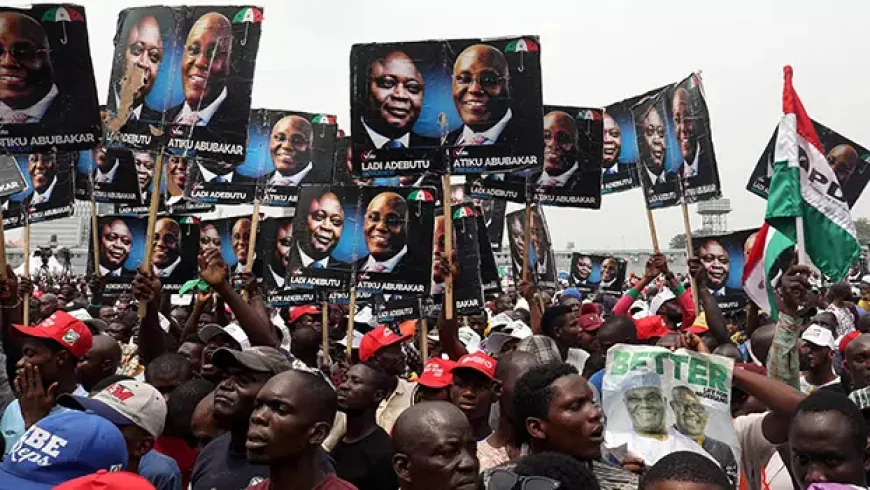
Nigeria's Opposition Is Collapsing Into the Ruling Party, Alarming Democracy Watchers
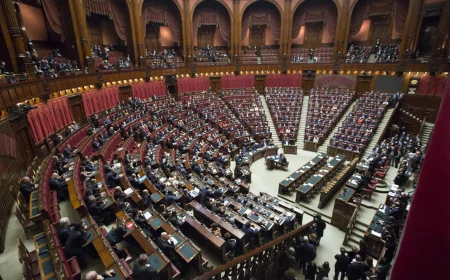
Mass defections from Nigeria's opposition parties to the ruling All Progressives Congress have reached a scale that analysts, civil society leaders, and opposition politicians themselves are describing as a potential threshold moment for democracy in Africa's most populous nation. The Africa Report warned this week of a "dangerous cycle" of retribution as President Bola Tinubu's administration processes demands to remove independent electoral and prosecutorial officials, while the wave of defections reduces the opposition benches in the National Assembly to levels that would make effective parliamentary oversight functionally impossible in a country of 220 million people.
The defections follow a pattern that Nigerian political scientists describe as a structural feature of the country's patronage-based political economy: political survival in Nigeria has historically required proximity to whoever controls federal resources, and Tinubu's government — following the 2023 election that was contested in court by opposition candidates — has used the distribution of federal projects, contracts, and appointments to create strong incentives for opposition politicians to switch sides. What is different in 2026 is the scale: multiple entire state-level delegations from the People's Democratic Party and the Labour Party have crossed to the APC within weeks, leaving both opposition parties in internal disarray.
The specific trigger for the most recent wave was Tinubu's decision to challenge the independence of Nigeria's Independent National Electoral Commission, whose leadership has resisted APC pressure on specific constituency-level disputes, and to pressure the office of the Special Prosecutor — established to investigate corruption — to prioritise cases against opposition figures rather than ruling party members. Opposition politicians who refused the pressure reported experiencing tax audits, contract cancellations, and security service attention; several described the environment as one in which the costs of independence exceeded the benefits.
Security Crisis Deepens the Political Consolidation
The political consolidation is happening simultaneously with a security deterioration across northern Nigeria that has no equivalent political solution in sight. Analysts who track violence in the region describe near-daily attacks by bandits and Boko Haram-affiliated groups across Katsina, Sokoto, Zamfara, and Kaduna states, with abductions, village burnings, and livestock theft affecting millions of people. A prominent Islamic cleric called this week for amnesty for the bandits, describing them as "victims driven to violence" by poverty and state neglect — a position that drew immediate condemnation from victims' groups and security officials but reflected the degree to which the security situation has produced competing political narratives about causes and solutions.
Nigerian armed forces were reported to have intervened in support of Benin's defence forces to thwart a coup attempt led by Lieutenant Colonel Pascal Tigri — an unusual external military engagement that underscored Nigeria's role as a security guarantor for smaller neighbours even as it struggles to contain its own internal violence. The Benin intervention was conducted at the request of the Beninese government and was described by Nigerian military officials as consistent with ECOWAS security frameworks.
The killing of eight Ghanaian tomato traders in Burkina Faso — attributed to Sahelian insurgents — raised questions this week about whether the Sahel insurgency is edging toward Ghana's northern border, a development that would test Accra's "safe-haven" status and alter the security calculus for the entire Gulf of Guinea coastal zone. Nigeria, as ECOWAS's dominant military power, would be expected to respond to any such expansion, adding another external commitment to an already stretched military.
INEC Independence Is the Critical Institutional Question
Electoral observers tracking Nigeria's democratic health point to INEC's independence as the single most important institutional variable for the November 2026 gubernatorial elections and the 2027 presidential cycle. If the APC succeeds in replacing INEC's leadership with figures more amenable to ruling party pressure, the electoral playing field for 2027 — which was already heavily tilted by incumbency advantages and resource control — would tilt further. Civil society organisations, including the Electoral Institute, Yiaga Africa, and the Centre for Democracy and Development, issued a joint statement Thursday warning that "the integrity of the electoral calendar depends on the institutional independence of INEC, which is currently under sustained and documented pressure."
Nigeria's 2027 presidential election will be the first in which a sitting two-term president cannot run. The question of who within the APC emerges as the ruling party's presidential candidate — and whether opposition parties have rebuilt enough institutional credibility to offer a genuine alternative — will define the stakes of the democratic consolidation currently underway.
According to Idayat Hassan, Director of the Centre for Democracy and Development in Abuja, "What we are watching in Nigeria is not a coup — it is something more insidious. It is the systematic disassembly of the institutional checks that make democratic accountability possible, done through legal and political means rather than military force."
Whether Nigeria's civil society, judiciary, and what remains of the opposition can reverse the consolidation before it becomes structurally locked in — or whether Africa's largest democracy follows the path of other large democracies that have slipped toward competitive authoritarianism — is a question that will be answered in the next 18 months, not the next 18 years.