















































Texas Primary: Talarico Tops Crockett, Cornyn Into Paxton Runoff
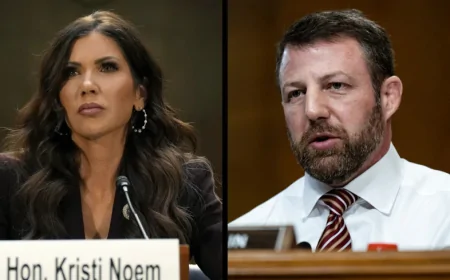
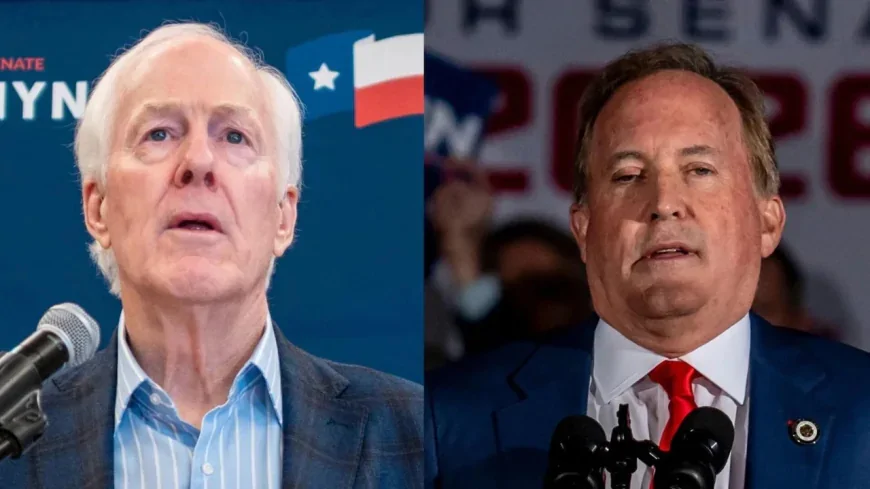
James Talarico defeated Jasmine Crockett in Texas's Democratic Senate primary as incumbent Sen. John Cornyn was forced into a runoff against Ken Paxton.
Texas Senate Primaries Reshape Both Parties' Paths in Pivotal 2026 Midterms
The first major primary elections of the 2026 midterm cycle delivered sharp and divergent verdicts Tuesday night, as Texas voters handed the Democratic Party a nominee who has never held federal office, forced a bruising Republican runoff between a veteran incumbent senator and a disgraced former attorney general, and set the stage for what could become the defining Senate battleground of the autumn.
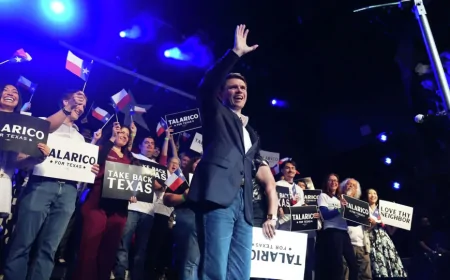
State Representative James Talarico, a 33-year-old Presbyterian seminarian and former teacher from Round Rock, defeated two-term US Representative Jasmine Crockett in the Democratic primary for the US Senate, ending a race that had functioned as an ideological referendum on what direction the party should run in the most competitive electoral environment in a generation. Talarico's win was not close enough to avoid a potential runoff, but he led by a sufficient margin to project confidence heading into any second contest.
On the Republican side, Senator John Cornyn — the 12-year incumbent and former Senate majority whip — failed to clear the primary outright in a three-way race, forcing him into a runoff against Attorney General Ken Paxton, whose tenure has been defined by a historic impeachment trial, acquittal by a Republican-controlled senate, and multiple ongoing federal investigations into alleged corruption.
Talarico vs. Crockett: A Battle Over Democratic Identity
The Talarico-Crockett contest was one of the more intellectually substantive Democratic primary fights in recent Texas history. Crockett, who built a national profile through sharp floor exchanges with Republican colleagues and positioned herself as a frontline fighter against President Trump, argued that Texas Democrats needed someone willing to mobilise the base through confrontational opposition politics. Her strategy reflected a school of thought dominant in safe blue districts: that high-intensity partisan identity wins elections.
Talarico took the opposite view. A self-described practitioner of a "politics of love" — a framework rooted in his theological training — he argued that Democrats cannot win statewide in Texas by activating only their base. His pitch: attract independents and even disaffected Republicans who have grown exhausted by the political extremism of both parties. He explicitly said he would work with President Trump when doing so served Texans' interests, a line that generated both admiration and fury within the party.
According to Dr. Victoria DeFrancesco Soto, Professor of Practice at the University of Texas at Austin's LBJ School of Public Affairs, "Talarico's win tells us that Texas Democratic primary voters, despite everything, are making a rational calculation about electability over ideological purity. Whether that calculus holds in November is the question that will define the next eight months."
Cornyn Under Threat, Paxton Defiant: The Republican Civil War Continues
The Republican result carries enormous implications for the direction of the Texas GOP and for President Trump's relationship with the Senate institution. Cornyn, who has served since 2002, represents the old establishment wing of the Republican Party — cautious, procedural, allied with the business community. Paxton represents something else entirely: a politician who survived impeachment, who has made his personal loyalty to Trump the cornerstone of his identity, and who sees a Senate seat as both vindication and escalation.
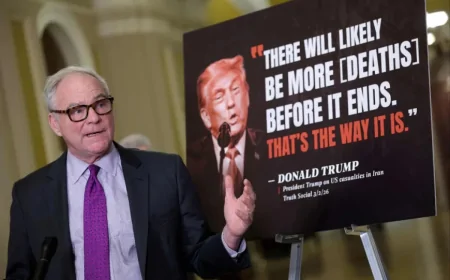
Trump's intervention is now the central variable. The president indicated he would endorse one of the two runoff candidates — and pressure the other to withdraw — suggesting an unusually direct presidential role in shaping a Senate race that establishment Republicans had hoped would resolve itself in Cornyn's favour.
In North Carolina, where voters also went to the polls Tuesday, former Democratic Governor Roy Cooper will advance to a general election matchup against former Republican National Committee Chairman Michael Whatley for the Senate seat being vacated by retiring Republican Senator Thom Tillis. Cooper's path to victory is narrow: he must simultaneously hold the Democratic base, peel off moderate Republicans, and persuade independents in a state Trump won three consecutive times. Cooper's message — emphasising affordability and positioning himself as an "independent" senator who would work with but also resist Trump — will be tested against Whatley's ability to align himself with the president's coalition without alienating the suburban voters Cooper is targeting. The first primaries have spoken. The general election campaign begins now.
The November Map: What These Results Mean for Senate Control
The first primaries of the 2026 midterm cycle have produced results that analysts across both parties regard as genuinely ambiguous about the autumn's prospects for Senate control. Republicans currently hold a 52-seat majority; Democrats need a net gain of three seats with a Democratic vice president to recapture the chamber. Texas and North Carolina are both on the target list — but the results of Tuesday's primaries make both contests harder to read, not easier.
In Texas, Talarico's nomination gives Democrats a candidate who is rhetorically positioned to compete for voters outside the traditional Democratic coalition. But Texas has not elected a Democrat to statewide office since 1994, and structural disadvantages — including Republican advantages in redistricted legislative maps and a significant rural voter registration gap — mean that Talarico's stylistic appeal must translate into a genuinely unusual electoral coalition to produce a victory. The Republican runoff between Cornyn and Paxton, meanwhile, risks producing either a weakened incumbent or a nominee carrying the weight of multiple federal investigations into the most competitive general election period in the state's recent history.
In North Carolina, Cooper's ability to walk the line between progressive credibility and moderate appeal will be tested by an opponent in Whatley who has deep roots in Republican Party organisation and will have the full weight of the national party apparatus behind him. The seat, rated as a true tossup by major electoral forecasters, is likely to be decided by less than three percentage points in November — making it one of the half-dozen contests that will determine congressional power for the next two years.