























U.S. Congressional War Powers Showdown Looms as Democrats Press Iran Authorisation
Senate Democrats and a small group of Republicans are formally demanding a War Powers Act authorisation for the Iran strikes, setting up the first congressional confrontation over military authority since 2002.
Democrats Force a War Powers Reckoning Over Iran Strikes Trump Never Asked Congress to Approve
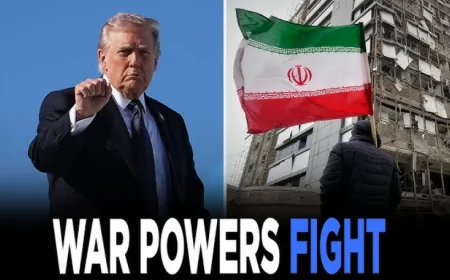
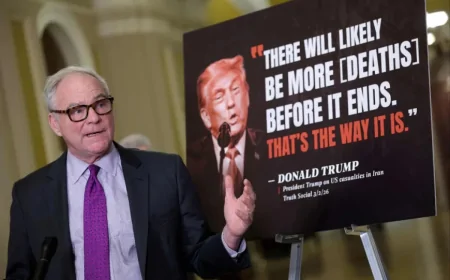
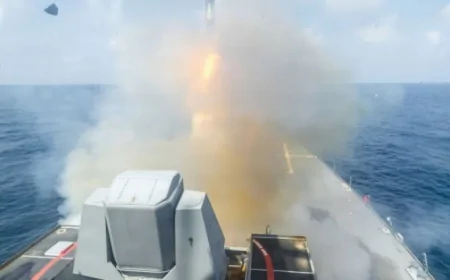
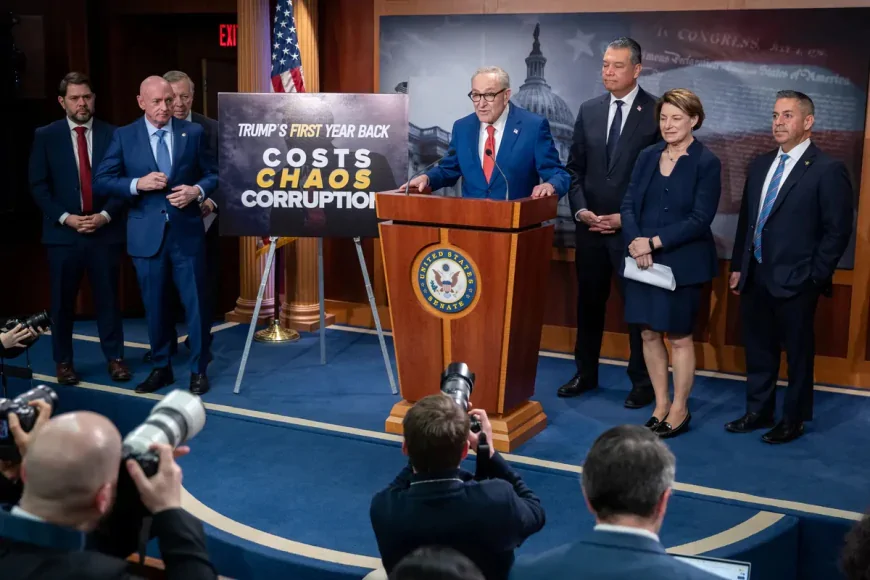
Senate Democrats and a growing number of libertarian-leaning Republicans launched a formal war powers challenge on Thursday, demanding that the Trump administration seek congressional authorisation for the Iran military operation under the War Powers Resolution of 1973 — setting up what constitutional scholars are describing as the first direct legislative confrontation over a president's unilateral use of military force since the 2002 Iraq War authorisation. No formal authorisation from Congress was sought before Operation Epic Fury began on February 28. The Trump administration has not cited a specific legal basis for the strikes beyond broad executive authority and self-defence claims that legal experts said did not survive careful scrutiny.
The War Powers Resolution requires the president to notify Congress within 48 hours of committing U.S. forces to combat and to obtain congressional authorisation within 60 days or withdraw those forces. Trump notified Congress — a pro forma step every president has taken to avoid triggering the resolution's withdrawal clock — but did not seek authorisation. The Senate Democrats' challenge, led by Senate Minority Leader Chuck Schumer and a coalition of 41 senators, invokes the resolution's consultation requirements and demands a formal legal memo from the Department of Justice Office of Legal Counsel explaining the administration's claimed statutory authority.
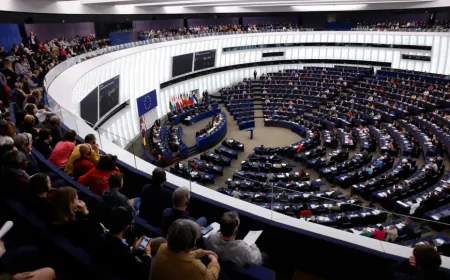
The demand was accompanied by a separate letter signed by 71 House members — including 6 Republicans — calling for an emergency joint session of Congress to debate the war's legal basis. Representative Barbara Lee of California, who cast the sole vote against the 2001 Authorization for Use of Military Force that became the legal foundation for 20 years of global counterterrorism operations, described the Iran situation as "déjà vu of the worst kind."
The 60-Day Clock and Its Constitutional Complications
The practical mechanics of the War Powers Resolution's 60-day clock create a constitutional confrontation that presidents have consistently avoided by disputing the resolution's constitutionality rather than complying with it. Every administration since Nixon has claimed that the War Powers Resolution represents an unconstitutional limitation on the commander-in-chief's authority, while simultaneously acting within its notification requirements to avoid forcing a judicial test of that claim.
If Congress formally invokes the resolution's withdrawal mechanism — which requires a concurrent resolution not subject to presidential veto — Trump would face a choice: comply with the withdrawal demand and end the Iran operation on whatever terms exist in 60 days, veto a resolution the resolution says cannot be vetoed, or rely on a Supreme Court that has never directly ruled on the resolution's constitutionality to invalidate the congressional action.
Constitutional law scholars at universities across the country noted Thursday that none of those options is clean. Legal analysts sympathetic to the administration's position argued that the strikes on Iran fall within the president's inherent constitutional authority as commander-in-chief and as self-defence against imminent threats — the same argument George W. Bush's administration made in 2001 and Barack Obama's administration made regarding strikes in Syria and Libya.
Tess Bridgeman, Senior Editor at Just Security and a former National Security Council legal director, wrote Thursday that the administration's shifting stated objectives for the Iran operation — nuclear disarmament in some statements, regime change in others — "make it impossible to apply a coherent self-defence analysis. Self-defence requires an imminent threat, a proportional response, and a clear nexus between the target and the threat. The legal justification collapses every time the objective shifts."
Republicans Who Oppose the War Face MAGA Consequences
The small number of Republicans who have publicly questioned the Iran operation's legal basis face an acute political calculation. Marjorie Taylor Greene's break with Trump over the war was ideological — rooted in America First anti-interventionism — but it has not been followed by a corresponding willingness to vote against a Republican president in the Senate or House. The institutional conservatism of Republican members, who depend on Trump's support for their own electoral survival, makes war powers votes a far more dangerous political terrain than floor speeches or social media statements.
Senator Rand Paul of Kentucky, the most consistent libertarian voice in the Republican caucus, announced Thursday he would file a war powers resolution in the Senate requiring the administration to obtain authorisation within 30 days or withdraw from Iran. Paul's previous war powers resolutions have attracted single-digit Republican support. Whether the Iran conflict's scale — larger than any U.S. military operation since Iraq in 2003 — produces a different result is the question every Senate vote counter is working through.
According to Professor Mary Ellen O'Connell, Robert and Marion Short Chair in Law at the University of Notre Dame and former president of the American Society of International Law, "The administration has an obligation under both U.S. law and international law to provide a coherent legal basis for this war. So far, what Congress has received is a briefing that raised more questions than it answered and a legal argument that shifts depending on which official is speaking."
Whether the war powers challenge produces a genuine constitutional confrontation — the kind that defines institutional relationships for a generation — or dissipates under the political weight of a wartime rally effect depends on how long the conflict continues, how many U.S. service members die, and whether the public's initial support for the operation survives the coming weeks.