

First UN Food Aid Flight in Three Years Lands in Sudan's Khartoum
A UN WFP supply flight landed in Khartoum Thursday for the first time in three years, exposing the depth of Sudan's unprecedented humanitarian collapse.
Key Takeaways
- A UN WFP supply flight landed in Khartoum Thursday for the first time in three years, exposing the depth of Sudan's unprecedented humanitarian collapse.
- A Single Plane Lands in Khartoum — and That Is Sudan's Humanitarian News Today A United Nations World Food Programme supply aircraft landed at Khartoum International Airport Thu...
- Published: Mar 05, 2026 — World News

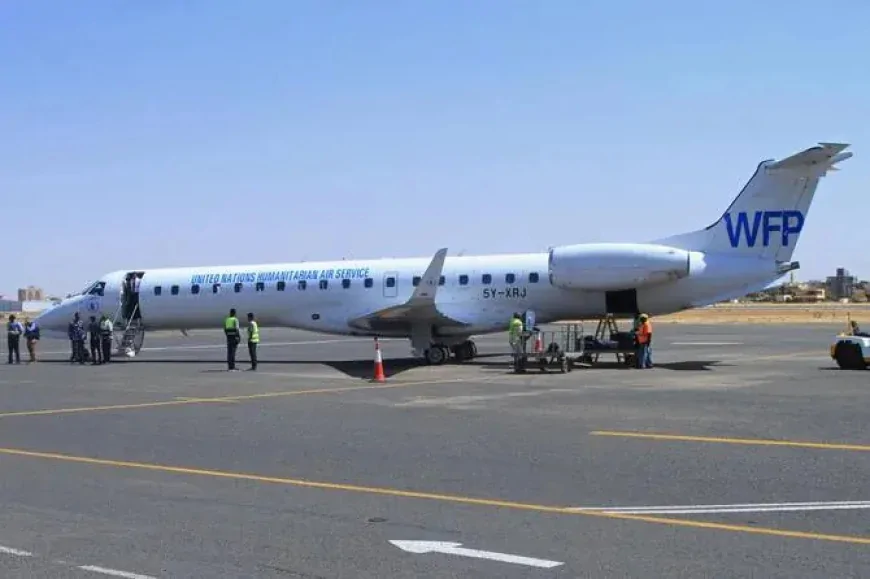
A Single Plane Lands in Khartoum — and That Is Sudan's Humanitarian News Today
A United Nations World Food Programme supply aircraft landed at Khartoum International Airport Thursday, the organisation confirmed — the first such flight to reach Sudan's capital in three years and a development that would be unremarkable in any other country but constitutes a significant milestone in a nation where basic humanitarian access has been systematically destroyed by civil war. The flight carried food aid and relief supplies. Its arrival required months of negotiation, security guarantees from multiple armed factions, and diplomatic engagement at the highest levels of the UN system.
The fact that a single humanitarian supply flight requires international recognition to document says everything necessary about the state of governance, security, and civilian protection in Sudan. Since April 2023, when fighting erupted between the Sudanese Armed Forces (SAF) and the Rapid Support Forces (RSF) — two entities that had jointly administered the country following the 2021 coup — Khartoum has been progressively transformed from a functioning capital city into a contested urban battleground in which millions of civilians have been trapped, displaced, or killed.
The RSF, whose forces seized control of large parts of Khartoum in 2023, have been documented by the UN, Human Rights Watch, Amnesty International, and multiple journalism investigations as having carried out mass atrocities against civilians in Darfur and in Khartoum's residential neighbourhoods — atrocities that include sexual violence used as a weapon of war on a scale that investigators have described as constituting crimes against humanity.
The RSF Parallel Government: A Fractured State Deepens
The political context for the flight's arrival has grown more complex in recent weeks. The RSF in February formalised what its leaders described as an alternative Sudanese government in alliance with the Sudan People's Liberation Movement-North, creating a parallel political authority that competes with the SAF-backed government in Port Sudan for international recognition. The SAF-backed government has condemned the move as an illegitimate attempt to partition the country.
The RSF's political manoeuvre is designed in part to create diplomatic facts on the ground that complicate the SAF's international standing and that eventually — its architects hope — will result in foreign governments, international financial institutions, and humanitarian organisations engaging with RSF-controlled territories as a legitimate political entity. Several African states that share borders with RSF-controlled regions have been pushed toward pragmatic contact with RSF political leadership, a development that the Port Sudan government regards as indirect recognition of a criminal actor.
According to Dr. Alex de Waal, Executive Director of the World Peace Foundation at Tufts University and one of the foremost Sudan scholars working today, "The RSF's formation of a parallel government is a deliberately calculated escalation of the political war alongside the military one. If international actors start negotiating directly with it — even on humanitarian issues — they are conferring a form of legitimacy that the SAF will read as an existential threat to any future united Sudanese state."
The Accountability Vacuum and the ICC
The International Criminal Court, which has had an open situation in Sudan since 2005 and issued arrest warrants for former President Omar al-Bashir over Darfur atrocities, faces renewed pressure from human rights organisations to open formal investigations into atrocities committed in the current conflict. Both the SAF and the RSF have been credibly accused of targeting civilian populations; the RSF's documented actions in Darfur in particular have prompted formal calls from UN Special Advisers for an atrocity determination.
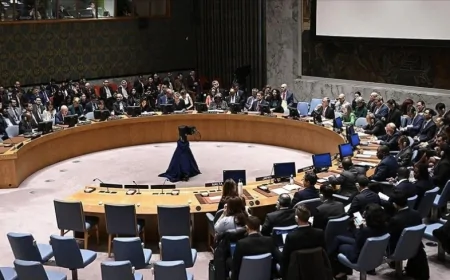
The UNSC, which referred Sudan to the ICC in 2005, has been unable to act on current Sudan atrocities because of Russian and Chinese abstentions. The structural accountability vacuum — in which crimes are documented but not prosecuted because great power politics shields the perpetrators — is precisely the environment in which mass atrocities tend to escalate rather than diminish.
The WFP flight landing in Khartoum carries two meanings simultaneously. For the people who may eventually receive the food it carried, it represents a fragile breach in a wall of obstruction that has cost lives. For Western governments and the UN's accountability to its own stated principles, it represents the depth of the compromise between humanitarian necessity and political failure that defines the Sudan crisis in 2026.
The Cholera-Free Declaration and the Paradox of Sudan's Statistics
In the same week that the WFP flight landed in Khartoum, Sudan's health authorities issued a declaration that the country is now "cholera free" — a claim that has been received with deep scepticism by international health organisations operating in the country. The Sudanese Armed Forces-backed government in Port Sudan has incentives to project normalcy and functional governance; the declaration of cholera freedom in a country with a collapsed public health system, contaminated water infrastructure, and millions of displaced people living in improvised camps without sanitation serves that political purpose regardless of its medical validity.
The same authorities noted a concurrent rise in dengue fever and measles cases, diseases that thrive in exactly the conditions that the war has created: overcrowding, poor sanitation, absence of vaccination campaigns, and health worker displacement. The pattern of a government declaring success on one indicator while adjacent indicators deteriorate is characteristic of communications management in conflict environments, not genuine public health improvement.
The humanitarian picture described by organisations with access to Sudan — Médecins Sans Frontières, the ICRC, and a limited number of UN agencies — is of a country in the middle of one of the worst humanitarian emergencies on earth, worsening rather than stabilising, and almost completely absent from the international news agenda that has been dominated by the Iran war. The WFP flight is a genuine achievement, hard-won by months of negotiation. Its symbolic significance — a single supply aircraft in a country of 47 million people experiencing famine conditions across multiple states — captures both how far Sudan has fallen and how limited the international response has been.
What's Your Reaction?
 Like
0
Like
0
 Dislike
0
Dislike
0
 Love
0
Love
0
 Funny
0
Funny
0
 Wow
0
Wow
0
 Sad
0
Sad
0
 Angry
0
Angry
0









Comments (0)