



























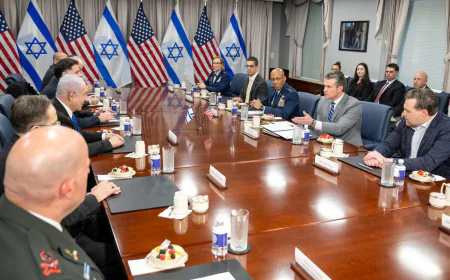








Qatar's FM Confronts Iran Over Gulf War Risk as Al Udeid Base Burns
Qatar's Foreign Minister made direct contact with his Iranian counterpart demanding an immediate halt to strikes in the Gulf, as missiles hit Al Udeid and Qatar grounded all flights.
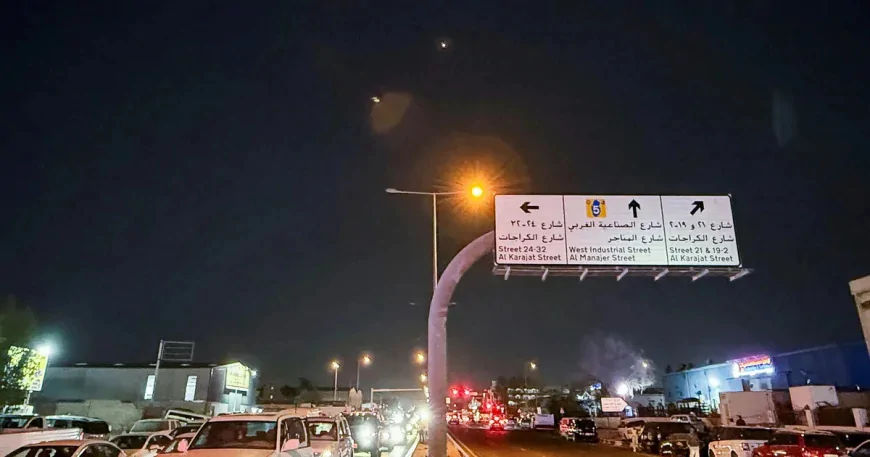
Qatar's Foreign Minister Calls Tehran Demanding War Halt as Doha Suspends Flights
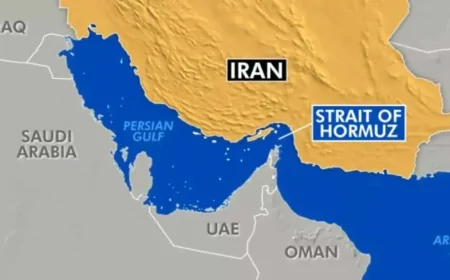
Qatar's Foreign Minister Sheikh Mohammed bin Abdulrahman bin Jassim Al Thani made direct contact with his Iranian counterpart Abbas Araghchi on Thursday — the first such communication between the two governments since the US-Israeli strikes on Iran began — demanding an immediate halt to Iranian strikes in the Gulf and warning that Iran risked dragging its neighbors into a conflict they did not choose. The call was Doha's most direct diplomatic intervention since the war began six days ago.
Sheikh Mohammed told Araghchi that Iran was "trying to drag neighbouring countries into a war that is not theirs," according to the Qatari Foreign Ministry's readout of the call. The minister made no statement expressing support for the US-Israeli military campaign — a calibrated omission that reflects Qatar's extraordinary diplomatic position: it simultaneously hosts the largest US military base in the Middle East and has maintained more open channels with Tehran than any other Gulf monarchy.
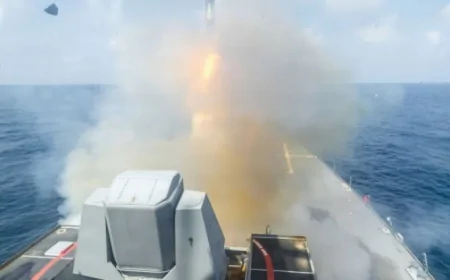
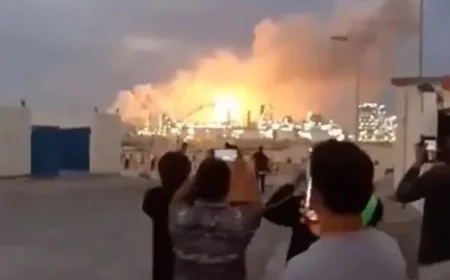
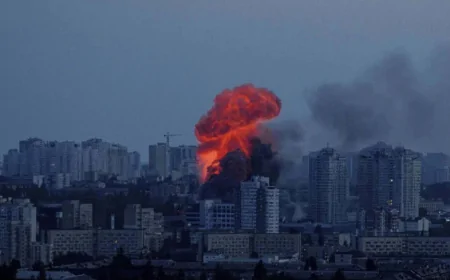
Two ballistic missiles struck the Al Udeid air base on Wednesday, according to Qatar's Defense Ministry, while a drone targeted an early warning radar installation at the facility. Qatar's Civil Aviation Authority subsequently suspended all air navigation indefinitely. Qatar Airways grounded all flights. Schools shifted to remote learning. Public Ramadan gatherings were suspended. Qatar had gone from regional diplomatic hub to active war zone in less than a week.
Qatar's Impossible Position
Qatar's dilemma illustrates the broader predicament of Gulf Arab states caught between their American security guarantor and an Iranian regime whose retaliation is hitting their territory, their infrastructure, and their citizens. Unlike Saudi Arabia, the UAE, and Bahrain — which have deep historical enmity with Tehran — Qatar has cultivated a studied neutrality toward Iran, sharing a massive natural gas field with the Islamic Republic and using its territory as a back-channel for US-Iran communications for nearly a decade.
That role as intermediary is now under existential pressure. With US military assets at Al Udeid actively participating in strikes on Iranian territory, Qatar cannot simultaneously serve as neutral facilitator and host of the attacking force. The government has not issued a formal condemnation of the US strikes — to do so would rupture the security relationship that underpins Qatar's defense. But its failure to express support has been noted in Washington, where officials have reportedly expressed frustration at what they view as insufficient Qatari solidarity.
The evacuation of residents near the US Embassy in Doha — described by Qatar's Ministry of Interior as a "temporary precautionary measure" — added to an atmosphere of barely managed crisis in the Qatari capital. The ambassador of the United States has remained at post, but non-essential US government personnel have been ordered to depart Qatar along with counterparts in Saudi Arabia, Kuwait, and Lebanon.
The Stakes for Gulf Arab Political Stability
According to Dr. Omar H. Rahman, senior fellow at the Middle East Council on Global Affairs in Doha, "Qatar has spent 15 years building its brand as a mediator and a safe harbor for difficult conversations. That brand is being demolished in real time. The Iranian strikes on Al Udeid are not aimed at Qatar — they are aimed at the United States. But Qatar cannot absorb the collateral political damage of being the battlefield for a war it didn't start and didn't want."
Whether the Qatari call to Araghchi produces any change in Iranian targeting will be closely watched across the Gulf. If Iran ceases to strike Al Udeid — even temporarily — it will be interpreted as a gesture toward Qatar and possibly the beginning of a diplomatic channel. If strikes continue, Qatar will face increasing pressure from the United States to formally align itself with the coalition, a step that would end its intermediary role permanently. The small peninsula state, which has bet its foreign policy for a generation on the proposition that it can be friends with everyone, is discovering the limits of that strategy under the weight of a regional war.
The Precedent of Qatar's Position and Gulf Fragility
Qatar's situation highlights a fragility that all Gulf monarchies share but that Doha's diplomatic hyperactivity has made particularly acute. The small state has built its security and prosperity on a model that requires simultaneously accommodating American military power, managing Iranian proximity, and projecting soft power through Al Jazeera, sports hosting, and shuttle diplomacy. That model assumed a level of geopolitical stability that no longer exists.
The Iran war has exposed what senior Gulf analysts had long argued privately: the Gulf states' security architecture depends almost entirely on American extended deterrence, and that deterrence comes with a price — accommodation of American strategic choices, including military ones, that may directly contradict the Gulf states' interests. Saudi Arabia, the UAE, Bahrain, and Qatar have all absorbed Iranian strikes in the past six days without formally protesting to Washington about the consequences of a war they did not request. That silence is the price of the security guarantee.
For Qatar specifically, the consequences of the war on its international role may outlast the conflict itself. If Al Udeid continues to be targeted — and if Qatari territory becomes definitively associated in regional perception with the US military campaign — Qatar loses the neutrality that has made it indispensable as a mediator in conflicts from Afghanistan to Gaza to Hamas-Israel talks. Once a mediator is perceived as a belligerent, the conversations that made it valuable stop happening in its capital. Qatar's greatest long-term loss from this war may not be the physical damage to Al Udeid, but the diplomatic damage to its self-appointed role as the region's indispensable back channel.