



























Chile's Kast Prepares Inauguration as Most Right-Wing President in 35 Years
Chile prepares to inaugurate José Antonio Kast on March 11 as its most avowedly free-market and law-and-order president since Pinochet's era, with a cabinet both diverse and controversial.
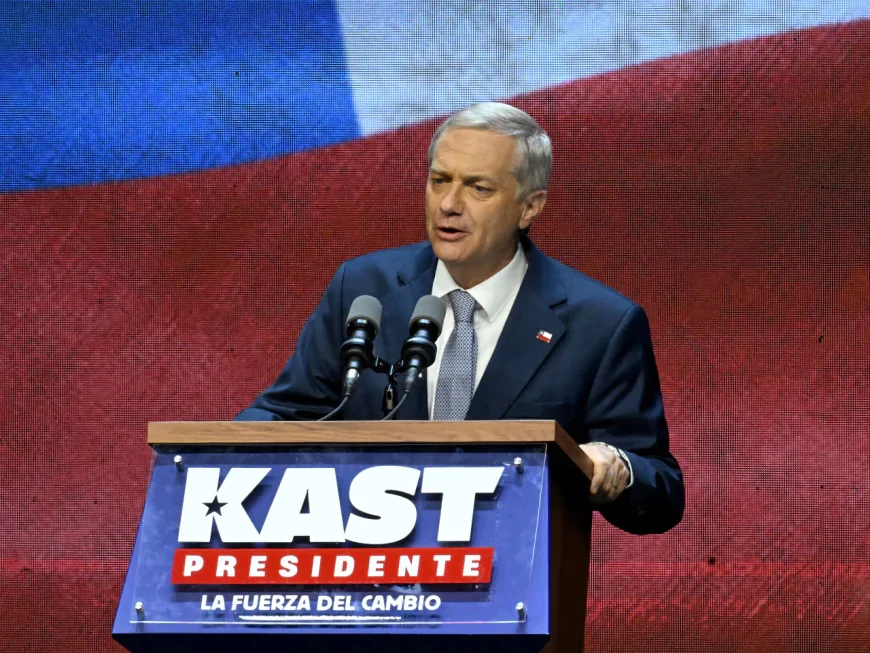
Chile's Hard Right Takes Power on March 11 After Decisive Electoral Victory
Chile is days away from the most significant political transition in more than three decades. José Antonio Kast, who won the December 2025 presidential runoff with 58.16 percent of the vote against leftist candidate Jeannette Jara, will be inaugurated as president on March 11, 2026 — ending four years of Gabriel Boric's progressive government and installing in Santiago a leader whose programme represents the sharpest ideological break in Chilean politics since the end of Augusto Pinochet's military dictatorship in 1990.
Kast's cabinet appointments, announced in mid-February, drew immediate international attention. The list was simultaneously diverse — including several women, a technocratic economic team with credibility in international markets, and ministers drawn from outside the traditional Republican Party base — and controversial, with multiple appointees holding stated positions on migration, security, and social policy that human rights organisations described as incompatible with Chile's obligations under international conventions. Kast himself has spoken admiringly of aspects of Pinochet's economic legacy, described undocumented migrants as a security threat requiring military responses, and pledged to expand the military's role in domestic law enforcement.
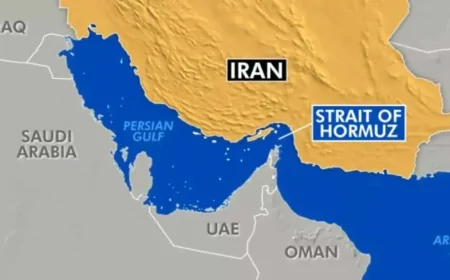
His first order of business, the new president has said, is the economy. Chile posted a 0.1 percent economic contraction in January 2026 — its first monthly contraction in several months — driven by slowing copper demand from China, which accounts for roughly half of Chilean export revenue. The IRGC's closure of the Strait of Hormuz this week added an oil-price inflationary shock to the incoming government's economic inheritance. Kast's free-market programme — tax cuts, labour market deregulation, the elimination of the capital gains tax Boric's government introduced, and the acceleration of lithium mining partnerships with private operators — is designed for a growth environment that the current global situation may not provide.
Immigration and Security: The Central Political Commitments
Kast's immigration platform was the most controversial element of his campaign and the one most watched internationally. He pledged to complete a wall along Chile's northern border with Peru and Bolivia, mass deportations of undocumented migrants, and the deployment of military units to northern border regions to interdict migrant crossings. The Trump administration expressed strong support for Kast's immigration agenda — one of the few instances of the White House offering explicit enthusiasm for a Latin American government's domestic policies beyond Venezuela and Honduras.
On crime, Kast pledged to expand the military's presence in anti-crime patrols — a policy he intends to formalise through legislation in his first 100 days — and to lengthen minimum sentencing for violent offences. The measures respond to a genuine public anxiety: Chileans have reported rising perceptions of insecurity in urban areas, and Kast's campaign events in Santiago drew significantly larger crowds than polling models predicted, suggesting the security issue resonated more deeply than elite commentary captured.
His government will also determine whether Chile maintains the candidacy of former President Michelle Bachelet for UN Secretary-General — a nomination made by Boric's administration in a tradition of regional solidarity that Kast's political movement has not endorsed. Kast has not confirmed whether the Bachelet nomination will be withdrawn or allowed to stand.
International Stakes: Copper, Lithium, and Great-Power Competition
Chile's strategic resources make Kast's government of disproportionate importance to the global critical minerals competition. Chile holds the world's largest known copper reserves and the second-largest lithium reserves, both of which are central to the energy transition and the semiconductor supply chains that U.S.-China competition treats as existential priorities. Boric's government attempted to partially nationalise the lithium sector through a new state framework — a plan Kast has pledged to reverse, reopening the sector to full private development under contracts he argues will generate more tax revenue and faster extraction than state-led models.
China is Chile's largest trading partner, purchasing more copper than any other country. Kast's government will face immediate pressure from Washington to limit Chinese investment in Chilean mining and infrastructure — pressure that may conflict with the economic interests of the Chilean mining sector, which has benefited from Chinese capital and demand for decades.
According to Claudia Sanhueza, Economist at the Centro de Estudios de Conflicto y Cohesión Social in Santiago, "Kast inherits a more fragile economy than the electoral campaign acknowledged, and the global shock from the Iran war makes his first 100 days harder than any scenario his team planned for."
Whether Kast's economic programme — conceived for a period of low global inflation and stable Chinese demand — survives contact with the geopolitical reality of March 2026 will be the first test of whether his bold electoral mandate translates into durable governing capacity.