













































Colombia Legislative Elections Sunday: Petro's Governing Alliance Faces Voter Backlash
Colombia holds legislative elections Sunday that will reshape Petro's congressional coalition three months before a presidential vote, as polls show significant voter dissatisfaction with his government.

Colombia's Legislative Vote Will Determine Whether Petro Can Govern for His Final Months
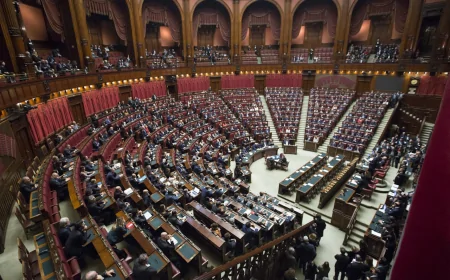
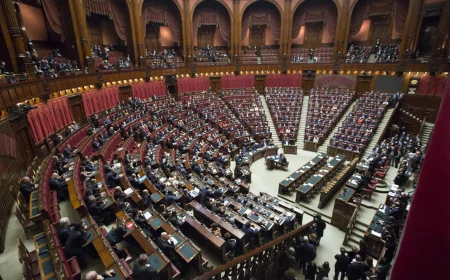
Colombia's Congress heads to the ballot box on Sunday, March 8, 2026, in legislative elections that will dramatically reshape the country's political landscape at a moment when President Gustavo Petro — Latin America's first leftist head of state — enters the final stretch of his single term facing the worst approval ratings of his presidency. The elections for all seats in the Senate and House of Representatives come exactly three months before the first round of a presidential election on May 31 that will determine whether Colombia continues along Petro's reformist path or pivots toward the centre-right opposition that has consolidated around his failures.
Petro's governing coalition — an alliance of left-wing and progressive parties that swept to power in 2022 on a historic wave of public anger at Colombia's traditional political establishment — has frayed badly over three years of governance. Multiple coalition partners have broken with the president over his management of the ongoing peace process with the ELN guerrilla group, his handling of the economy, and a series of corruption scandals inside his administration that have given the opposition its sharpest attack lines. His approval rating had fallen below 35 percent in multiple polls by February 2026.
The legislative elections will not directly remove Petro from office — he serves until 2026's end regardless of Sunday's outcome — but they will determine how much congressional leverage he retains to advance legislation in his final months and how much political capital he can deploy to influence the May presidential race. A poor performance by Pacto Histórico, his political movement, would accelerate the narrative that his presidency represents a cautionary tale for the Latin American left rather than a proof of concept.
The Opposition Landscape: Fragmented but Motivated
No single opposition candidate or movement has emerged to consolidate anti-Petro sentiment ahead of the May presidential contest, but the legislative elections will function as a sorting mechanism. Parties and candidates who perform well on Sunday will enter the presidential campaign with momentum, financial credibility, and the argument that their political brand can carry a national contest. Those who underperform will face difficult decisions about coalition-building before the May 31 filing deadline.
The dominant opposition themes are security and the economy. Colombia's homicide rate, which had declined significantly under previous administrations' negotiated agreements with criminal groups, has risen in regions where Petro's "total peace" strategy — a comprehensive attempt to negotiate simultaneously with all armed groups — has broken down. The ELN peace talks, which Petro invested enormous political capital in, stalled repeatedly, and the group continued armed operations in border regions throughout the negotiations. Venezuela's destabilisation under Maduro — and the aftermath of the U.S. military operation that removed Maduro in February 2026 — added a volatile external dimension to Colombia's security environment that no candidate can afford to ignore.
Petro sought to meet Trump administration officials before the legislative vote, framing bilateral engagement as a way to demonstrate that his government could manage the Colombia-U.S. relationship during a sensitive regional moment. The White House had been openly hostile to Petro's government on multiple occasions, including a January 2025 dispute over deportation flights that briefly escalated into a tariff standoff before both sides de-escalated.
What the Vote Means for May's Presidential Race
Five countries in Latin America will hold presidential elections in 2026 — Brazil, Colombia, Costa Rica, Haiti, and Peru — and Colombia's is the most watched in the region because it will test whether the pink tide of Latin American leftism that Petro embodied has a second act or whether it fades alongside his government. Chile's incoming president-elect José Antonio Kast, inaugurated on March 11, represents the opposite pole — the region's most avowedly free-market, law-and-order right-wing programme in a generation. The Colombia election will tell analysts whether that rightward shift is a durable regional trend or a pendulum swing.
Sunday's coalition primaries will produce candidate lists but not direct nominations for the May first round. The top vote-getters will skip directly to the May 31 contest without a separate primary. Polling suggests the field will remain fragmented until a runoff in June determines the next president.
According to Sergio Guzmán, Director of Colombia Risk Analysis, "Sunday's vote is Petro's last political test before the presidential campaign fully takes over. A strong opposition performance doesn't end his presidency, but it ends his ability to claim any mandate for his final months — and that matters enormously for whether his legacy reforms survive him."
Whether Sunday's results produce a cleaner political picture for Colombia's presidential race or add another layer of fragmentation to an already crowded field will become clear by Monday morning — and the answer will reverberate across Latin America well into the second half of 2026.