

Texas Primary Chaos: Dallas Voting Confusion Throws Crockett-Talarico Race Into Limbo
Dallas County's decision to switch to precinct-level polling caused hundreds of voters to show up at wrong sites, prompting a court battle over late votes in the Crockett-Talarico Senate primary.
Key Takeaways
- Dallas County's decision to switch to precinct-level polling caused hundreds of voters to show up at wrong sites, prompting a court battle over late votes in the Crockett-Talarico Senate primary.
- Dallas Voting Chaos Puts Texas Democratic Senate Primary in Legal JeopardyThe first primary elections of the 2026 midterm cycle ended not in a clean result but in a Texas-sized ...
- Published: Mar 04, 2026 — U.S. News

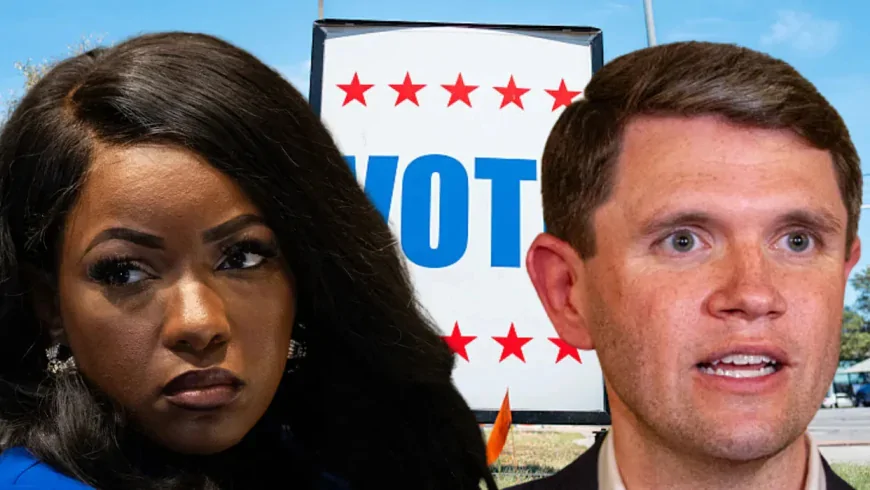
Dallas Voting Chaos Puts Texas Democratic Senate Primary in Legal Jeopardy
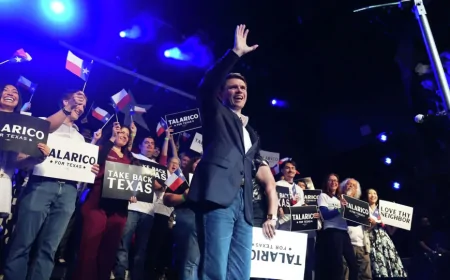
The first primary elections of the 2026 midterm cycle ended not in a clean result but in a Texas-sized legal dispute on Tuesday night, as Dallas County's decision to switch from countywide to precinct-level polling sites created confusion that sent hundreds of voters to the wrong locations and triggered a cascade of judicial interventions that left the outcome of the Democratic Senate primary uncertain by midnight. The race pitting progressive incumbent Representative Jasmine Crockett against state Representative James Talarico — two candidates embodying a fundamental strategic dispute inside the Democratic Party — was still unresolved Thursday morning pending resolution of the legal battle over whether votes cast after the 7:00 p.m. poll-closing time should be counted.
The sequence began when Dallas County Republicans changed their polling arrangements, requiring voters to cast ballots at their local precincts rather than countywide voting centres — a change that was not adequately communicated to voters in the state's second-largest county. Hundreds of voters arrived at polling sites where they could not legally vote. A county judge, responding to emergency petitions from Democratic lawyers, ordered polls to remain open two hours past the 7:00 p.m. closing time to compensate for the confusion. Hours later, the Texas Supreme Court intervened, mandating that votes cast after the original closing time be held separately from the main count pending further legal review.
Crockett, whose base of support is heavily concentrated in Dallas, accused Republicans of deliberately engineering the confusion to suppress her vote. "My heart is breaking," she told supporters, describing video messages she had received from voters who were "crying and hurt" after being turned away. She called for an investigation and demanded the separated ballots be counted. Republican officials denied the accusation, attributing the confusion to an administrative change they described as routine.
The Ideological Divide That Made the Race a National Story
The Crockett-Talarico primary had attracted national attention because it crystalised a debate the Democratic Party has been having since its 2024 losses: whether to win back working-class and moderate voters by softening its message, or to mobilise the base with uncompromising progressive politics. Talarico, the challenger, campaigned on bipartisan appeal and economic messaging, positioning himself as a candidate who could win in November. Crockett, a progressive firebrand who has become one of the most nationally prominent members of the House Judiciary Committee, argued that Democrats win by exciting their voters, not by moving toward the centre.
Former Vice President Kamala Harris weighed in publicly ahead of the vote, a notable intervention from a figure who has largely stayed out of intra-party primaries since her 2024 defeat. The primary also attracted millions in outside spending from rival super PACs linked to competing factions within the AI industry — an unusual funding pattern that reflected the degree to which technology sector money has penetrated early-cycle political races.
In the Republican Senate primary, the headline result was the runoff between incumbent Senator John Cornyn and Texas Attorney General Ken Paxton, neither of whom cleared 50 percent. Paxton challenged Cornyn from his right flank in a race that consumed almost $100 million in advertising. The runoff places Trump in a delicate position: Cornyn is a senior Senate figure whose institutional influence the White House values, but Paxton has cultivated a loyal MAGA following that expects a Trump endorsement.
Dan Crenshaw Becomes First Incumbent to Lose in 2026 Cycle
The evening's most decisive result came in Texas's 2nd Congressional District, where state Representative Steve Toth defeated incumbent Representative Dan Crenshaw, making Crenshaw the first sitting member of Congress to lose in the 2026 midterm cycle. The race centred almost entirely on which candidate more closely aligned with Trump — a measure on which Crenshaw, a decorated Navy SEAL and former television personality, was persistently outflanked by Toth's more unconditional MAGA positioning.
Crenshaw had been a target of far-right media figures since he questioned aspects of the 2020 election results and clashed with Greene and other hardline members over procedural issues. His loss signals that in safe Republican districts, proximity to Trump's most uncompromising positions has become a threshold requirement rather than a differentiating advantage.
In North Carolina, Trump-endorsed Michael Whatley won the Republican Senate primary to replace retiring Senator Thom Tillis, and Roy Cooper advanced on the Democratic side. Tom Cotton won the Arkansas Republican Senate primary without difficulty.
According to Kyle Kondik, Managing Editor of Sabato's Crystal Ball at the University of Virginia Center for Politics, "The chaos in Dallas is a warning: election administration breakdowns in competitive primaries don't just create legal disputes — they create narratives that shape turnout and trust in November when it really matters."
Whether the Texas Supreme Court's intervention results in the separate late ballots being counted or discarded — and whether the final Crockett-Talarico result reflects the actual intent of Dallas voters — will determine both the outcome of this primary and the legitimacy of a process that was compromised before the first disputed vote was cast.
What's Your Reaction?
 Like
0
Like
0
 Dislike
0
Dislike
0
 Love
0
Love
0
 Funny
0
Funny
0
 Wow
0
Wow
0
 Sad
0
Sad
0
 Angry
0
Angry
0










Comments (0)