

DRC-Rwanda Peace Deal Fraying as M23 Holds Uvira, 90,000 Congolese Displaced
The December 2025 DRC-Rwanda peace deal is showing signs of collapse as M23 rebels continue to hold Uvira three months after the agreement, with more than 90,000 Congolese displaced across the border.
Key Takeaways
- The December 2025 DRC-Rwanda peace deal is showing signs of collapse as M23 rebels continue to hold Uvira three months after the agreement, with more than 90,000 Congolese displaced across the border.
- Congo-Rwanda Peace Agreement Fractures as M23 Holds Its Ground Three Months OnThe peace agreement signed in Washington on December 4, 2025 between the Democratic Republic of Con...
- Published: Mar 04, 2026 — World News

Congo-Rwanda Peace Agreement Fractures as M23 Holds Its Ground Three Months On
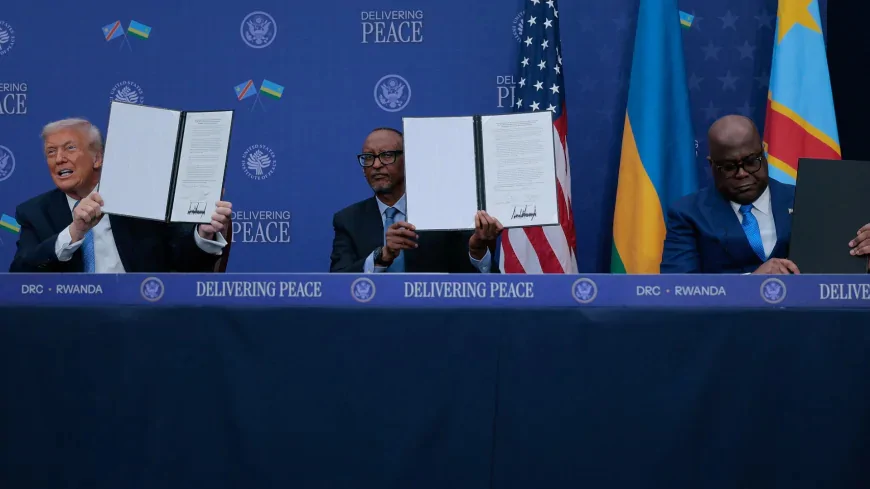
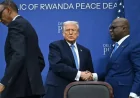
The peace agreement signed in Washington on December 4, 2025 between the Democratic Republic of Congo and Rwanda — signed in the presence of President Donald Trump in what the White House framed as a diplomatic achievement — is showing signs of serious strain three months after the ceremony, as the M23 rebel group backed by Rwanda continues to hold Uvira, a strategic commercial hub in South Kivu province, and more than 90,000 Congolese civilians remain displaced across the border in Rwanda and Uganda with no timeline for return.
The agreement was signed in an atmosphere that Al Jazeera's correspondents described at the time as betraying "any sense of a harmonious conclusion" — the body language between Congolese President Félix Tshisekedi and Rwandan President Paul Kagame at the signing ceremony suggested political calculation rather than genuine reconciliation. Three months later, that initial scepticism appears validated. M23 fighters who were supposed to withdraw from territory seized during the most recent offensive — including Uvira, which fell in November 2025 — have not done so. The monitoring mechanism established under the peace framework has documented the non-compliance but has no enforcement capacity.
The humanitarian picture in Uvira and the surrounding South Kivu corridor is severe. More than 90,000 Congolese who fled when M23 stormed the city nearly three months ago remain across the border, unable to return to homes that M23 fighters still occupy. UNHCR described conditions in the cross-border camps as deteriorating, with winter temperatures in the highland border regions adding cold exposure to food and water insecurity. Médecins Sans Frontières warned of a measles and cholera risk in the densely crowded informal settlements where displaced Congolese have gathered.
The Rwanda Factor and the Limits of U.S. Diplomacy
The DRC conflict's fundamental political dynamic has not changed despite the December agreement: Rwanda has consistently denied direct support for M23, despite what UN expert groups have documented as overwhelming evidence of Rwandan military personnel, weapons, and command and control involvement in M23 operations. The peace deal did not resolve this basic evidentiary and accountability dispute — it papered over it with a diplomatic framework that both sides could claim to support without conceding anything fundamental.
U.S. diplomacy under Trump's special envoy for Africa facilitated the December signing but has subsequently been preoccupied with the Iran war, Ukraine, and the Venezuela transition — three crises that absorb significantly more White House attention than the Congo. African Union mediators, who have more sustained institutional knowledge of the conflict, lack the leverage that U.S. presence provided in December. Angola's President João Lourenço, who brokered earlier rounds of Congo-Rwanda talks as AU mediator, was attempting to re-engage both Kinshasa and Kigali this week but reported no breakthrough.
The DRC's cobalt and coltan deposits — the minerals that make the eastern Congo geopolitically significant to every major power — continue to be extracted by networks that include M23-controlled territory, with revenues financing the armed group's operational capacity. China, the dominant buyer of DRC cobalt, has declined to use its purchasing leverage to condition its supply chain access on M23 withdrawal — a stance that critics argue makes Beijing a structural enabler of the conflict even as it presents itself as a neutral development partner.
The Broader Great Lakes Crisis
The DRC-Rwanda conflict exists within a wider Great Lakes security crisis that includes Ethiopia-Tigray reigniting, the Sudan war's regional spillover, and Burundi's internal tensions — interconnected conflicts that have turned the region into one of the world's largest concentrated zones of humanitarian need. The DRC alone has the world's largest internal displacement crisis, with an estimated 7 million people displaced before M23's latest offensive added further numbers.
The African Union's credibility in managing the Great Lakes crisis has been repeatedly questioned, with critics noting that the institution's member states include Rwanda — making it structurally difficult for the AU to hold Kigali accountable for conduct its own members have documented. The East African Community's monitoring force, deployed to the DRC under a regional framework, has had limited operational impact on M23's territorial control.
According to Koenraad Van Braeckel, Great Lakes Director at the International Crisis Group, "The December peace deal was a political achievement in the sense that both governments signed something. But it was not a peace deal in the operational sense — M23 is still where it was, the civilians are still displaced, and the monitoring mechanism has no way to compel compliance. The gap between the paper and the reality has never been larger."
Whether the DRC-Rwanda agreement can be salvaged through renewed diplomatic pressure — or whether it becomes another entry in the long list of Congo peace frameworks that collapsed on contact with the region's underlying power dynamics — will depend on whether the United States, China, or a coalition of African states chooses to invest the political capital required to make compliance a condition that Kigali cannot simply ignore.
What's Your Reaction?
 Like
0
Like
0
 Dislike
0
Dislike
0
 Love
0
Love
0
 Funny
0
Funny
0
 Wow
0
Wow
0
 Sad
0
Sad
0
 Angry
0
Angry
0







Comments (0)