

Iran's Assembly of Experts Acts to Pick New Supreme Leader in War
Iran's Assembly of Experts confirmed it will select a new supreme leader at the earliest opportunity as the US-Israel war rages across the country.
Key Takeaways
- Iran's Assembly of Experts confirmed it will select a new supreme leader at the earliest opportunity as the US-Israel war rages across the country.
- Iran Faces Historic Leadership Transition as War Reshapes the Islamic Republic Iran is moving toward selecting a new supreme leader, the clerical body empowered to make that app...
- Published: Mar 05, 2026 — Middle east

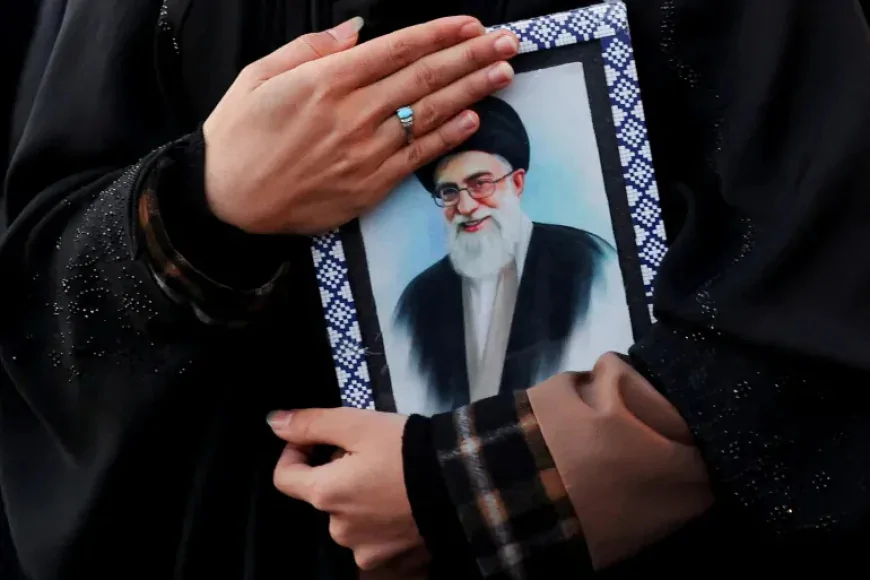
Iran Faces Historic Leadership Transition as War Reshapes the Islamic Republic
Iran is moving toward selecting a new supreme leader, the clerical body empowered to make that appointment confirmed Wednesday, as the Islamic Republic navigates the most severe military crisis in its 46-year history. Ayatollah Ahmad Khatami, a member of Iran's 88-seat Assembly of Experts, was quoted on Iranian state television saying the new leader will be chosen "at the earliest appropriate opportunity," but added that "right now the country is in a state of war." The statement is the most explicit public acknowledgment to date that the succession process is actively underway.
The announcement carries extraordinary political weight. Iran's supreme leader, currently Ayatollah Ali Khamenei, holds near-total authority over the country's military, judiciary, foreign policy, and nuclear programme. Any leadership transition during an active armed conflict creates governance risks that the Islamic Republic's ruling establishment has never previously confronted.
US and Israeli strikes, which began last Saturday, have targeted Iran's military infrastructure, naval assets, and what officials claim are facilities associated with the country's nuclear programme. Iranian state media continues to assert that Iran is winning the war, even as communications blackouts, banking restrictions, and escalating airstrikes paint a markedly different picture for Iranians who can access outside information.
The Succession Mechanics: A Closed and Secretive Process
The Assembly of Experts is a constitutionally mandated body of senior clerics elected by the Iranian public but operating with extensive vetting that effectively excludes candidates not approved by the Guardian Council. In practice, the assembly's deliberations on leadership succession are among the most opaque political processes in the world. No formal public timeline, candidate list, or procedural standard governs how quickly a new leader must be named.
Iran's constitution requires that if the supreme leader becomes incapacitated or dies, a council of three senior figures — including the president, the head of the judiciary, and a jurist from the Guardian Council — assumes leadership temporarily while the Assembly of Experts convenes to select a permanent replacement. The speed of that process is entirely at the assembly's discretion, meaning the transition could take days, weeks, or months.
Several names have circulated in Iranian political and theological circles as potential successors to Khamenei, who has led the country since 1989. Among them are President Masoud Pezeshkian, a moderate elected in 2024, and a number of senior clerics within the traditional establishment. None of these candidates has been publicly confirmed as a frontrunner, and naming specific successors publicly would itself be seen as a politically destabilising act inside Iran.
Strategic Implications: Who Controls the Nuclear Decision?
The leadership transition question intersects directly with the nuclear issue that precipitated the current conflict. Authority over Iran's nuclear programme runs through the supreme leader's office. In a succession vacuum — even a brief one — the chain of command over that programme, and over decisions about whether to escalate, de-escalate, or negotiate, becomes genuinely unclear.
Israeli officials briefing journalists on Wednesday acknowledged that Iran's nuclear capacity was "not totally wiped out" and that the country "still maintained certain capabilities" despite the strikes. If a new supreme leader emerges from the transitional chaos with hardline credentials and control over the Revolutionary Guards, the conflict's trajectory could become even less predictable than it currently is.
According to Professor Ali Ansari, Director of the Institute of Iranian Studies at the University of St Andrews, "A leadership transition under wartime conditions is the scenario the Islamic Republic's architects specifically tried to design against. The assembly's language suggests they are trying to project control, but the very fact they are signalling the transition at all tells you the internal pressure is significant." Whether Iran emerges from this war with its theocratic governing structure intact — or fundamentally altered — is the question that will shape the Middle East for the next generation.
The Diplomatic Track: Is There a Negotiation on the Horizon?
Despite the active military conflict, back-channel diplomatic activity involving Iran, the United States, and intermediary states including Oman and Qatar has not completely stopped, according to people familiar with the contacts. The channels that produced the 2015 JCPOA nuclear agreement and the subsequent 2023 prisoner exchange — both brokered significantly through Omani mediation — have been activated informally even as bombs fall. Whether they can produce an early diplomatic resolution depends on questions that remain genuinely opaque: whether factions within the Islamic Republic that would accept a deal have sufficient internal authority to make one, and whether the Trump administration's stated objectives are achievable through negotiation or only through sustained military action.
European foreign ministers have been in contact with Omani and Qatari counterparts seeking to establish whether a ceasefire-for-talks framework is plausible. The European Union's foreign policy chief Kaja Kallas has engaged in multiple rounds of shuttle diplomacy. None of these contacts has produced a public framework or a named set of conditions that both sides have acknowledged as a basis for negotiation.
The supreme leadership succession question complicates the diplomatic track further. Without a confirmed supreme leader, the question of who in the Iranian system can make a binding commitment in negotiations is genuinely unclear — and any agreement reached with an acting or transitional authority risks being repudiated by whoever ultimately assumes the role. The diplomatic window that exists is narrow, and it may be closing faster than any of the parties involved in the back-channel contacts appreciate.
What's Your Reaction?
 Like
0
Like
0
 Dislike
0
Dislike
0
 Love
0
Love
0
 Funny
0
Funny
0
 Wow
0
Wow
0
 Sad
0
Sad
0
 Angry
0
Angry
0






Comments (0)